October Half Term Holiday in Zakynthos
This October half term my family and I swapped the grey skies of the UK for something a little more uplifting: a week on the beautiful Ionian island of Zakynthos (Zante), staying in the relaxed resort of Argassi.
On arrival we immediately noticed how quiet it felt. Nearing the end of the season, some shops and restaurants were already closed for the winter, and each evening we saw another taverna stacking chairs or taking down its sign.
On the first day of our holiday we encountered some very heavy rain. Luckily there was a sports bar just around the corner from our hotel so we camped out there for the afternoon, watched football, drank cocktails and played pool.
Luckily on the second day the weather improved and we decided to get a taxi to Zakynthos Town, the island’s small but characterful capital, which is a ten-minute drive from Argassi. It has a very different feel from the beach resorts, with its harbourfront, churches and squares reflecting the island’s Venetian past.
We wandered along the seafront promenade, watched the ferries and fishing boats coming and going, and ducked into side streets lined with cafés and shops. Even at the end of the season there was a gentle buzz around Dionysios Solomos Square and along the main streets, with locals out for coffee.
You can still see touches of the town’s history in its architecture and museums. The 1953 earthquake destroyed much of the original town, but it was rebuilt with respect for its Venetian heritage.
Over the next few days the weather settled into a very typical late‑October pattern for the Ionian Islands, a mix of warm, sunny spells and cloudier, breezier days. Regular autumn and winter rainfall, combined with mild temperatures, is what makes the Ionian Islands so famously green and lush. The internal mountainous region is covered in olive groves and pine forests and the sea is some of the clearest I’ve ever seen.
Daytime temperatures at this time of year are usually in the low to mid‑20s, with sea temperatures often in the low 20s too. The perfect weather for getting out and about and seeing what Zakynthos has to offer.
The highlight of our week was a full‑day tour of Zakynthos by jeep. Although the island is relatively compact, it is actually one of the larger Greek islands and has a surprising amount of variety, yet it is still very easy to explore in a day.
We began by driving up the east coast, passing a string of small resorts and coves. Our first real stop was Xigia Beach, a tiny cove tucked beneath cliffs where the water is enriched with sulphur and collagen from nearby natural springs and volcanic rocks.
You can smell the faint whiff of sulphur as you walk down. The minerals in the water are believed by locals to have therapeutic properties, especially for skin and joints, and the sea here takes on a milky, turquoise hue where the spring water mixes with the saltwater. It’s a great little spot for snorkelling.
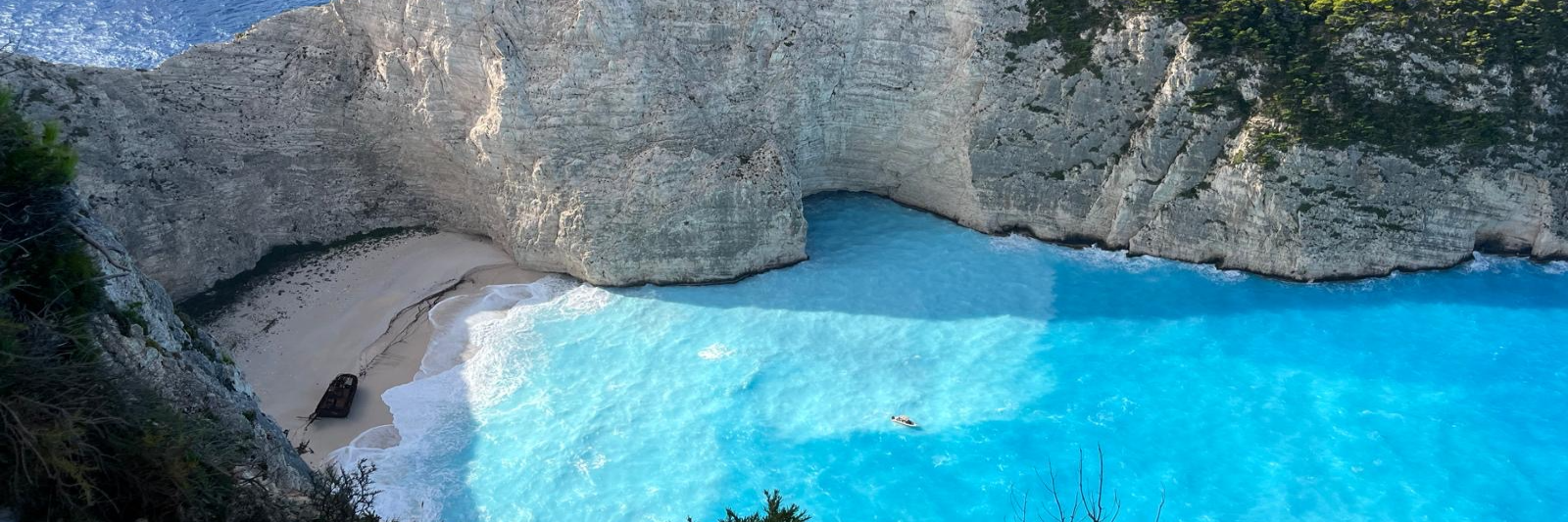
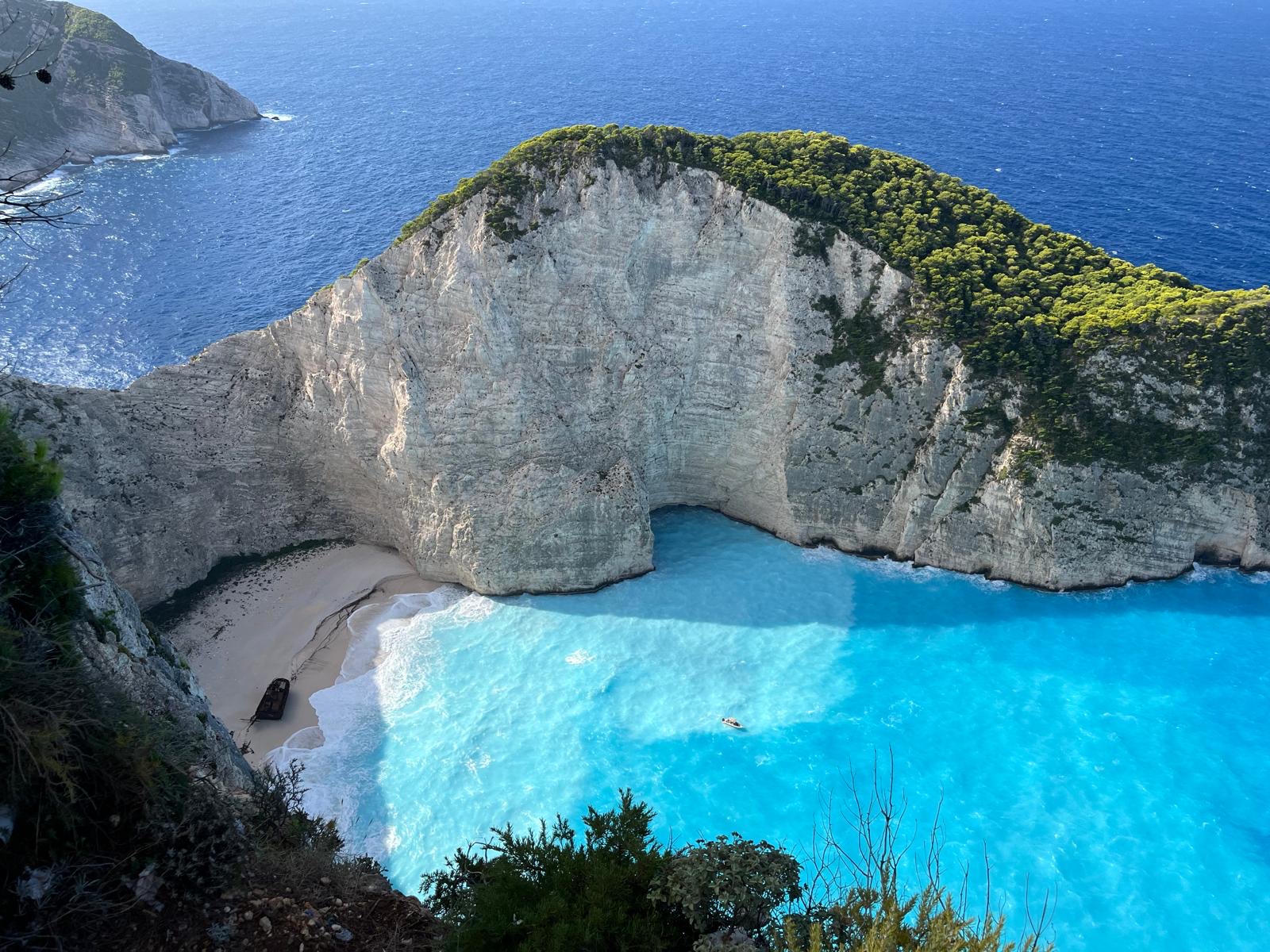
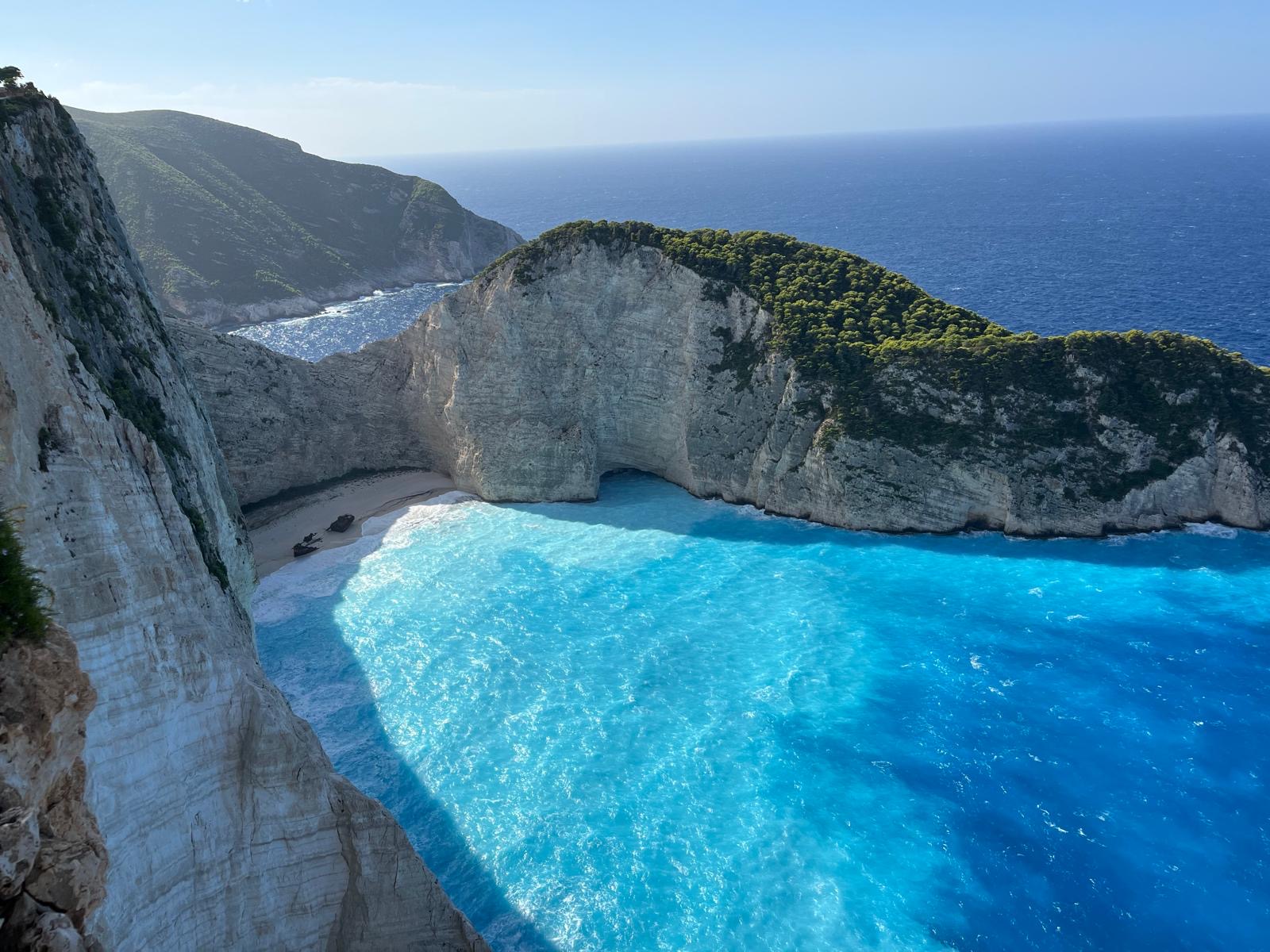
From there we continued north and cut across the island towards the famous Shipwreck Beach viewpoint. Navagio, as it is known locally, is one of the most photographed beaches in Greece: a sheer horseshoe of white cliffs wrapped around a tiny strip of shingle, with an old rusting ship sitting dramatically in the middle, all framed by electric‑blue water.
The ship itself, the MV Panagiotis, ran aground in the early 1980s. The most commonly told story is that it was allegedly smuggling contraband cigarettes and was being pursued by the Greek navy. Caught in bad weather, it ended up stranded in this remote cove where it has slowly rusted ever since, becoming an accidental landmark and icon.
Due to rockfalls from the surrounding cliffs, the beach itself has been closed for the past few years, so you can now only view it safely from the clifftop viewpoint. In high summer this involves an early start and a queue of coaches and tour groups snaking along the path.
Visiting at the very end of the season felt completely different. There were only a handful of other people when we arrived, so we could take our time at the railings and soak up the view. The colour of the sea was extraordinary. A brilliant chalky blue which is created by sunlight bouncing off the white limestone sand and rock particles suspended in the water.
Seeing such a famously busy spot without the usual crowds was a real treat, and one of the big advantages of travelling at this time of year.
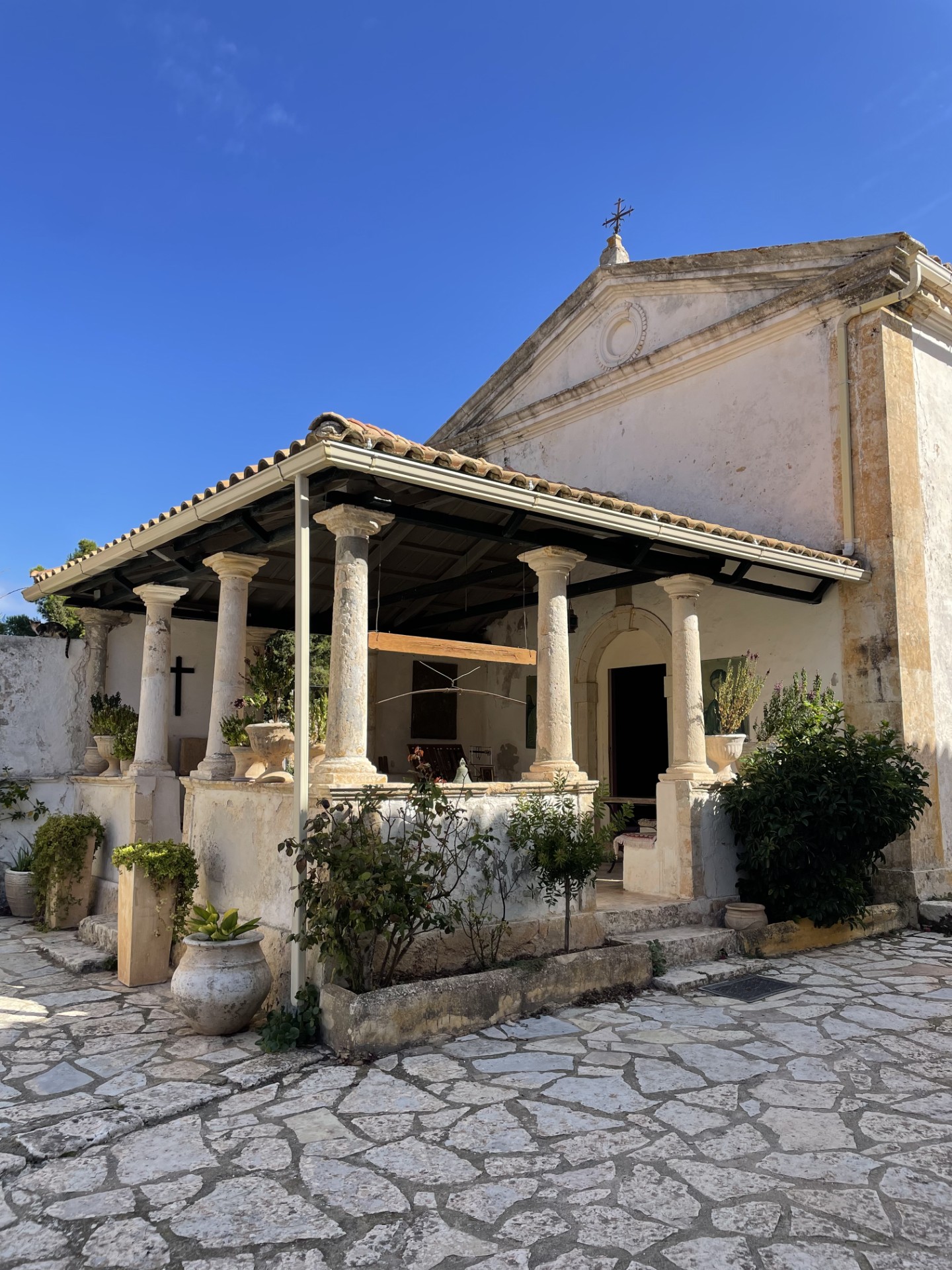
From there we headed inland to a peaceful monastery set
among fields and olive groves. Seven monks still live here, and wandering
around gave us a gentle glimpse into their way of life, working the land,
tending to gardens and producing their own goods. Inside, beautiful mosaics and
religious artworks lined the walls, many crafted by the monks themselves.
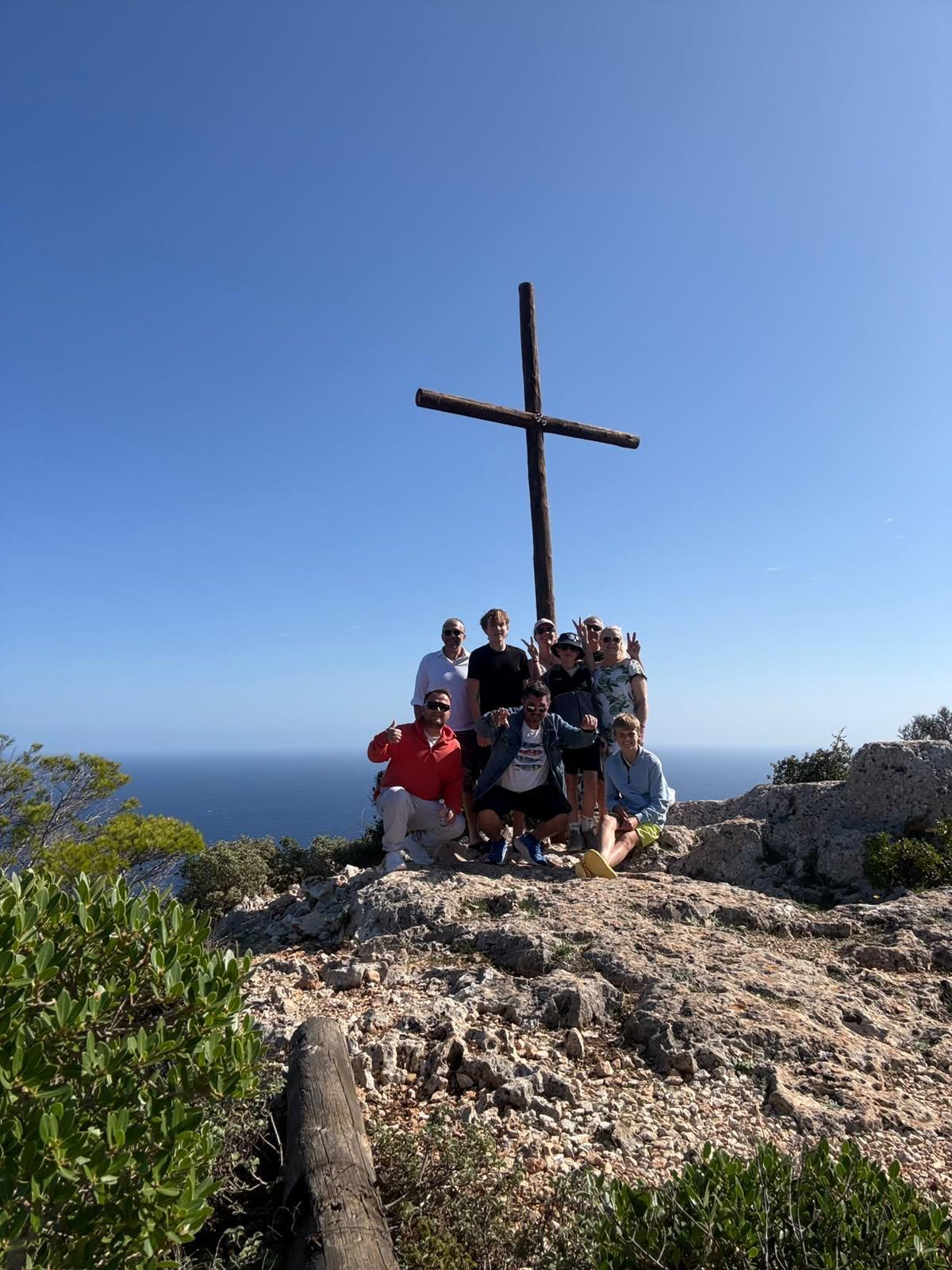
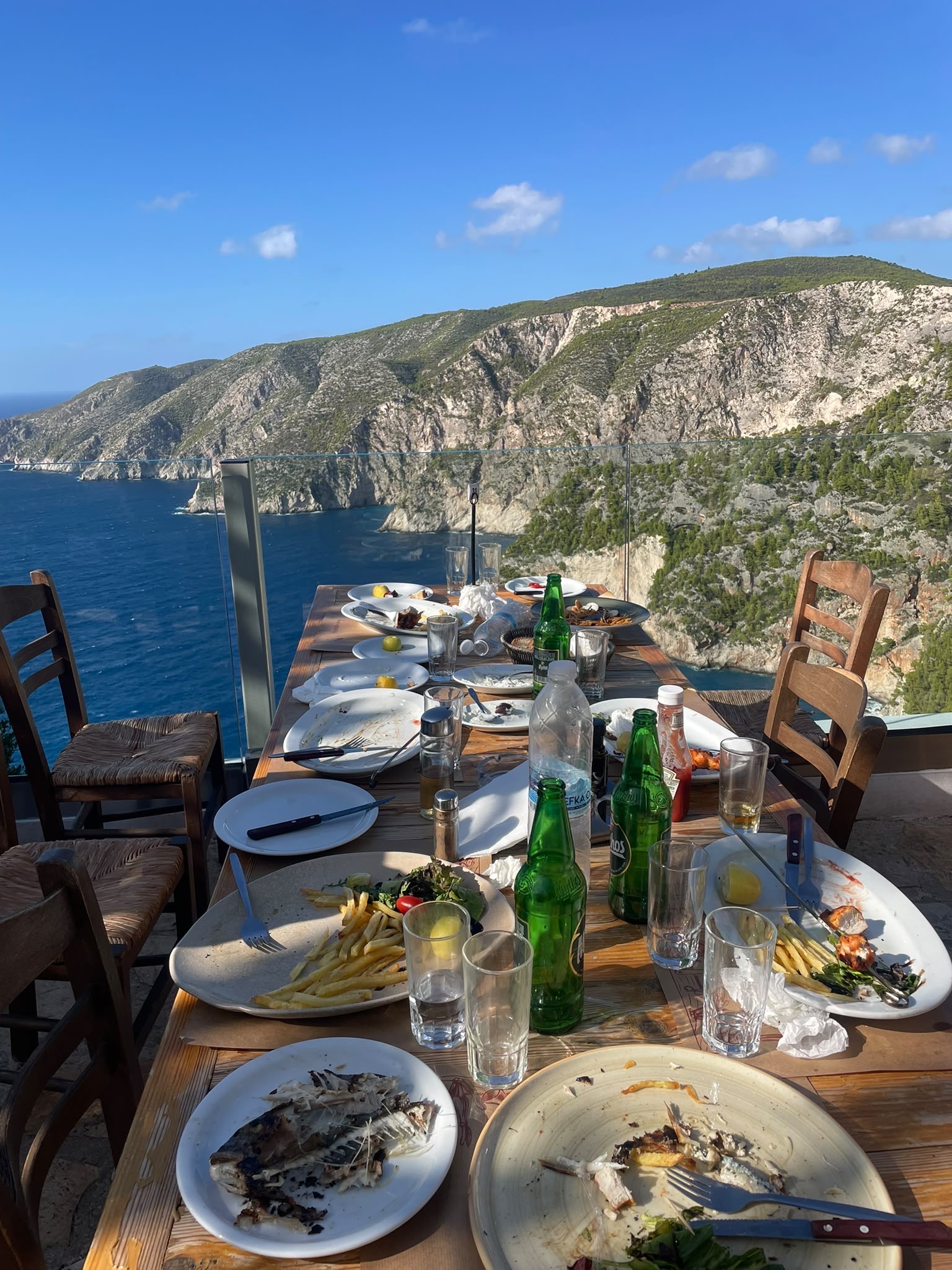
Lunch was in a lovely taverna perched on the cliffs, serving simple, delicious food with an incredible view.
In the afternoon we meandered through the mountain villages, stopping to buy locally made products from a small producer. We came away with olive oil, olive paste, honey and raki, all made within a few kilometres of where we were standing. There is something lovely about meeting the people behind the products you take home.
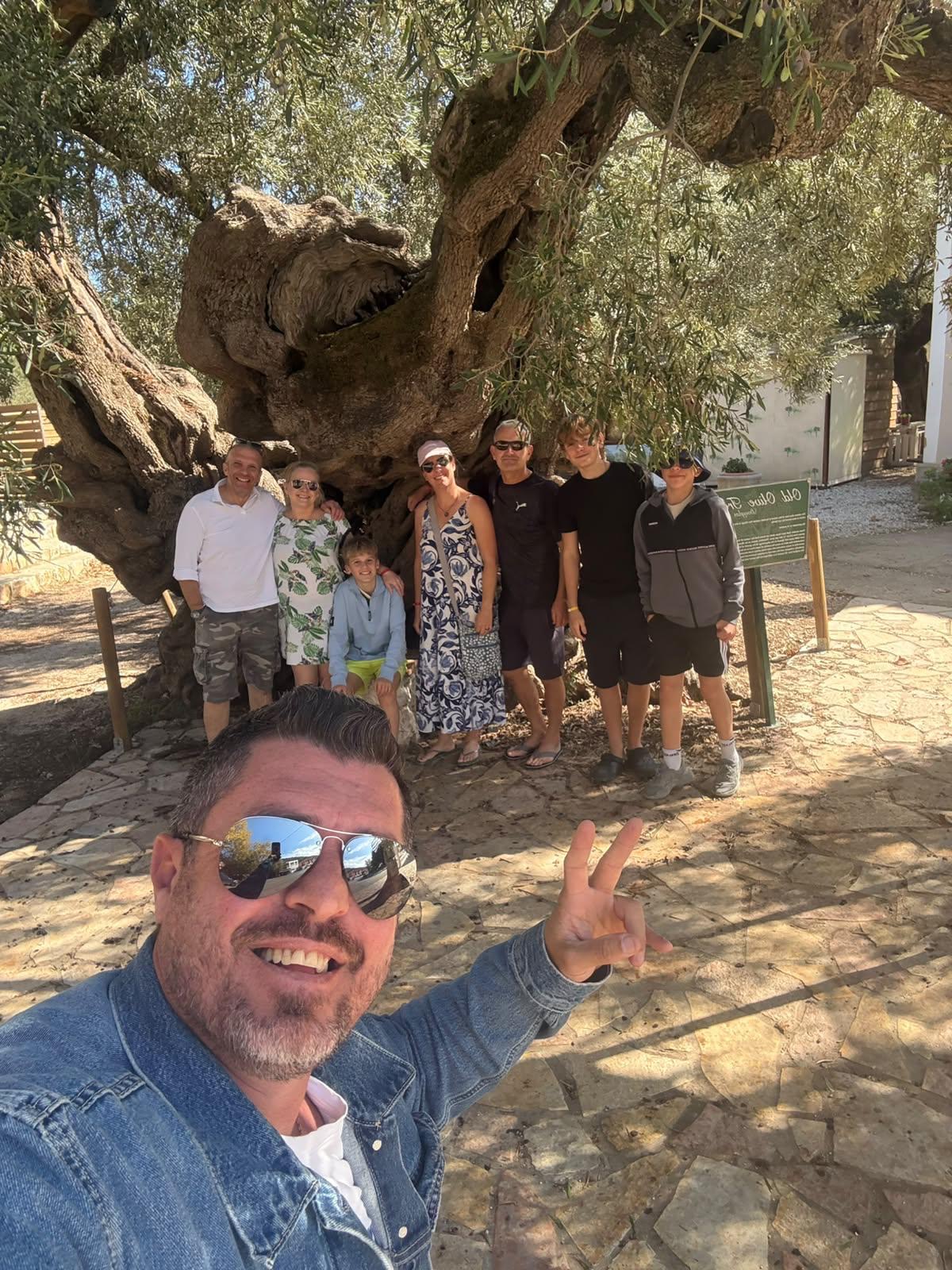
We also stopped to see what is said to be the oldest olive tree on Zakynthos, around 2,000 years old.
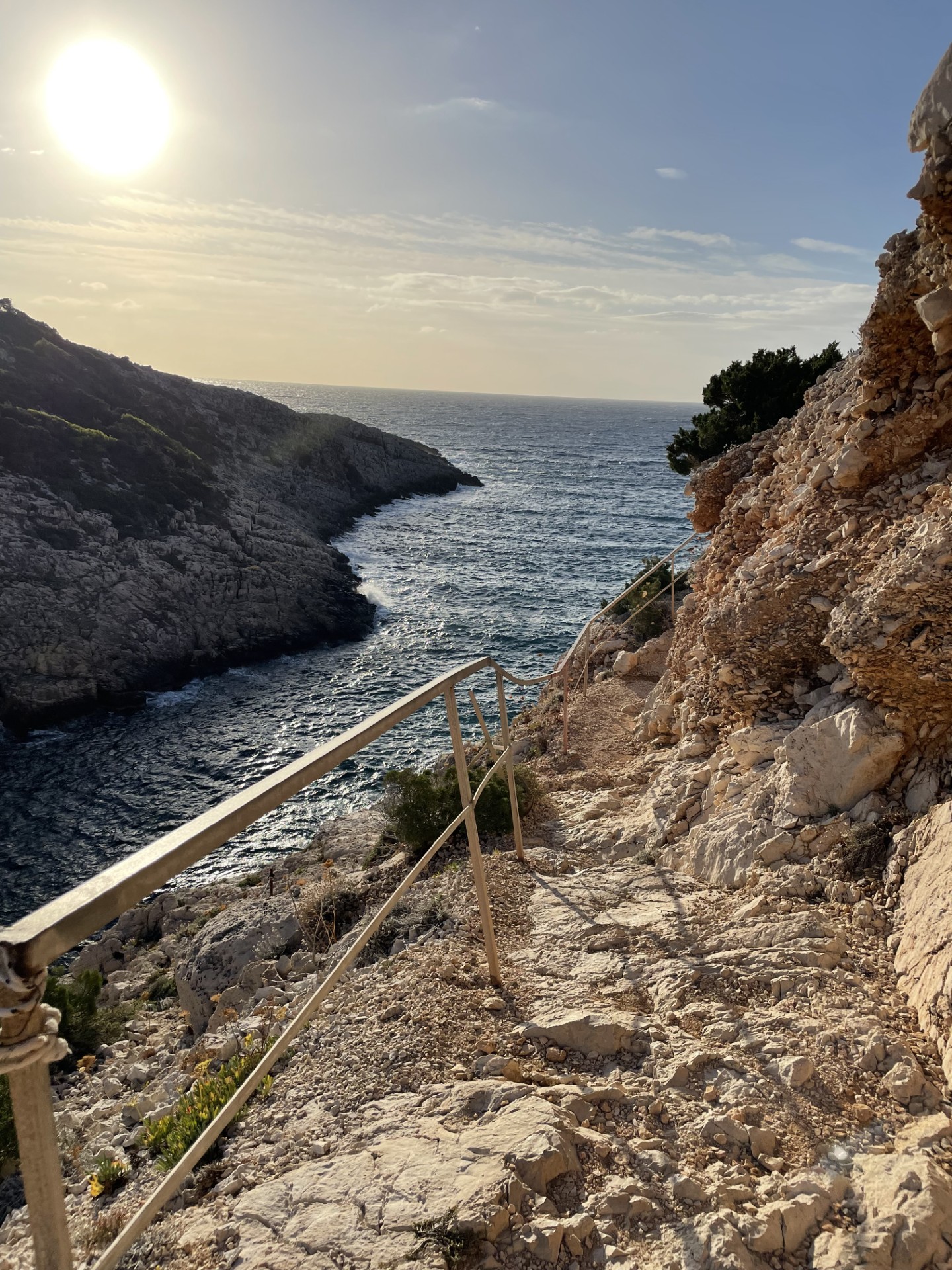
On our way back down the west coast we paused at Porto Limnionas, a narrow, fjord‑like inlet with crystal‑clear water and sheer rocks on either side. In warmer weather it is a brilliant snorkelling spot, with caves and ledges to explore, but on this particular day it felt just a little too chilly for us to brave the water.
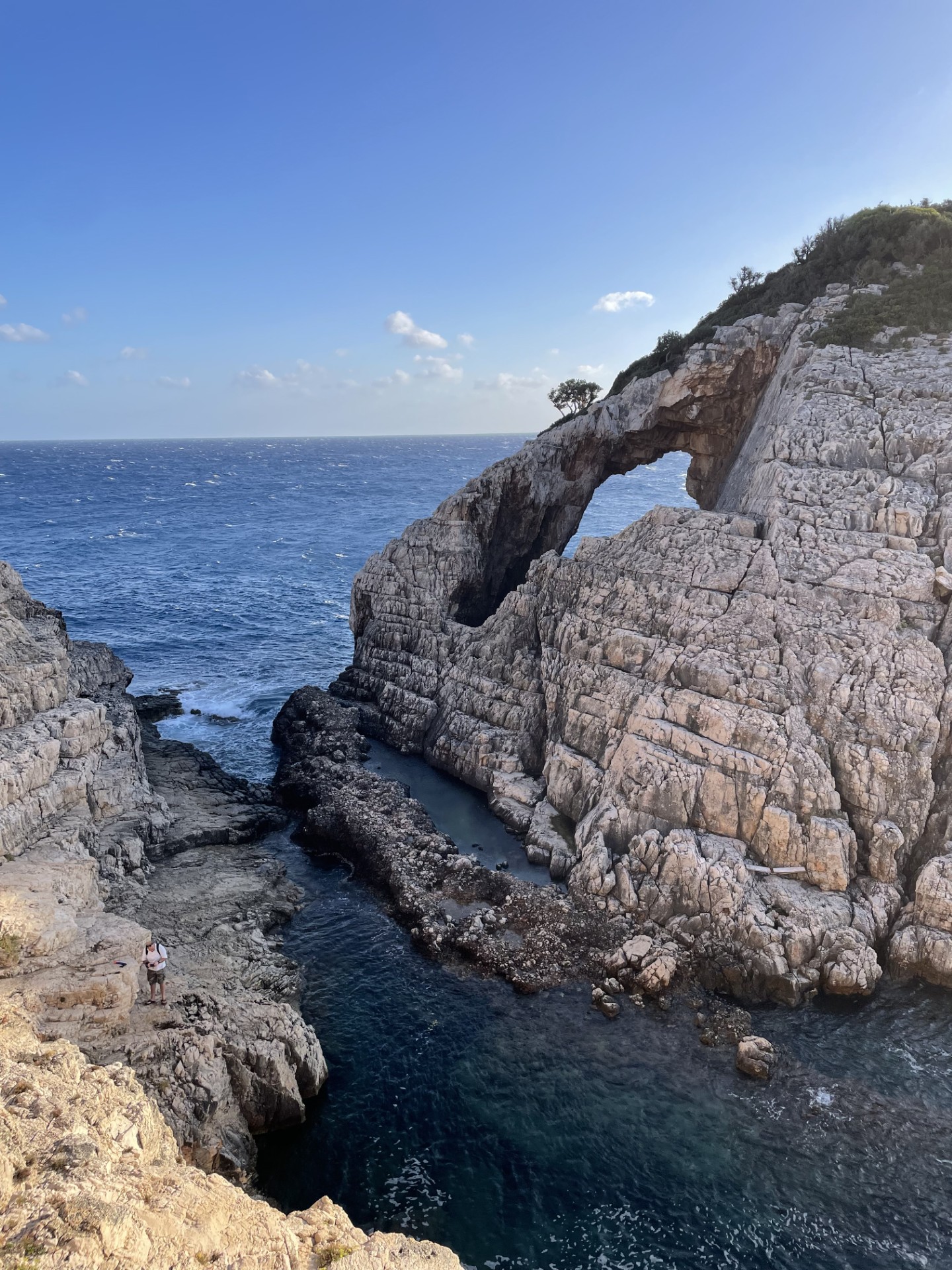
Our final stop of the day was Korakonisi, a dramatic rocky outcrop linked to the mainland by a natural arch. Over time the waves have carved channels and pools into the rock, creating a natural playground for swimmers and snorkeller. We clambered down the rocky path to reach the sea and braved the cold water with our snorkelling gear.
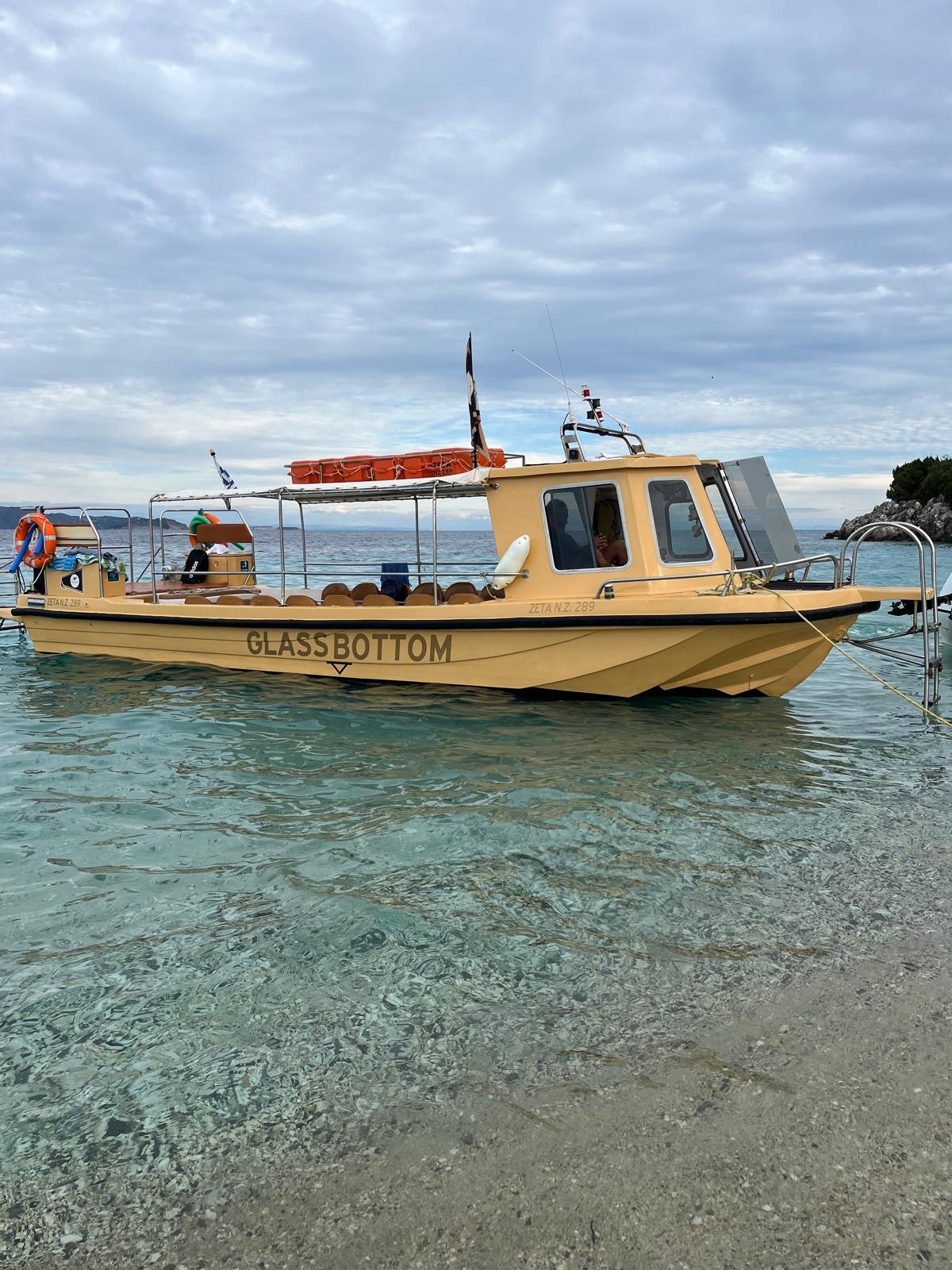
Another highlight of our holiday was a glass‑bottom boat trip from Laganas Bay, part of the National Marine Park established to protect the endangered loggerhead sea turtles (Caretta caretta) that nest on the sandy beaches here.
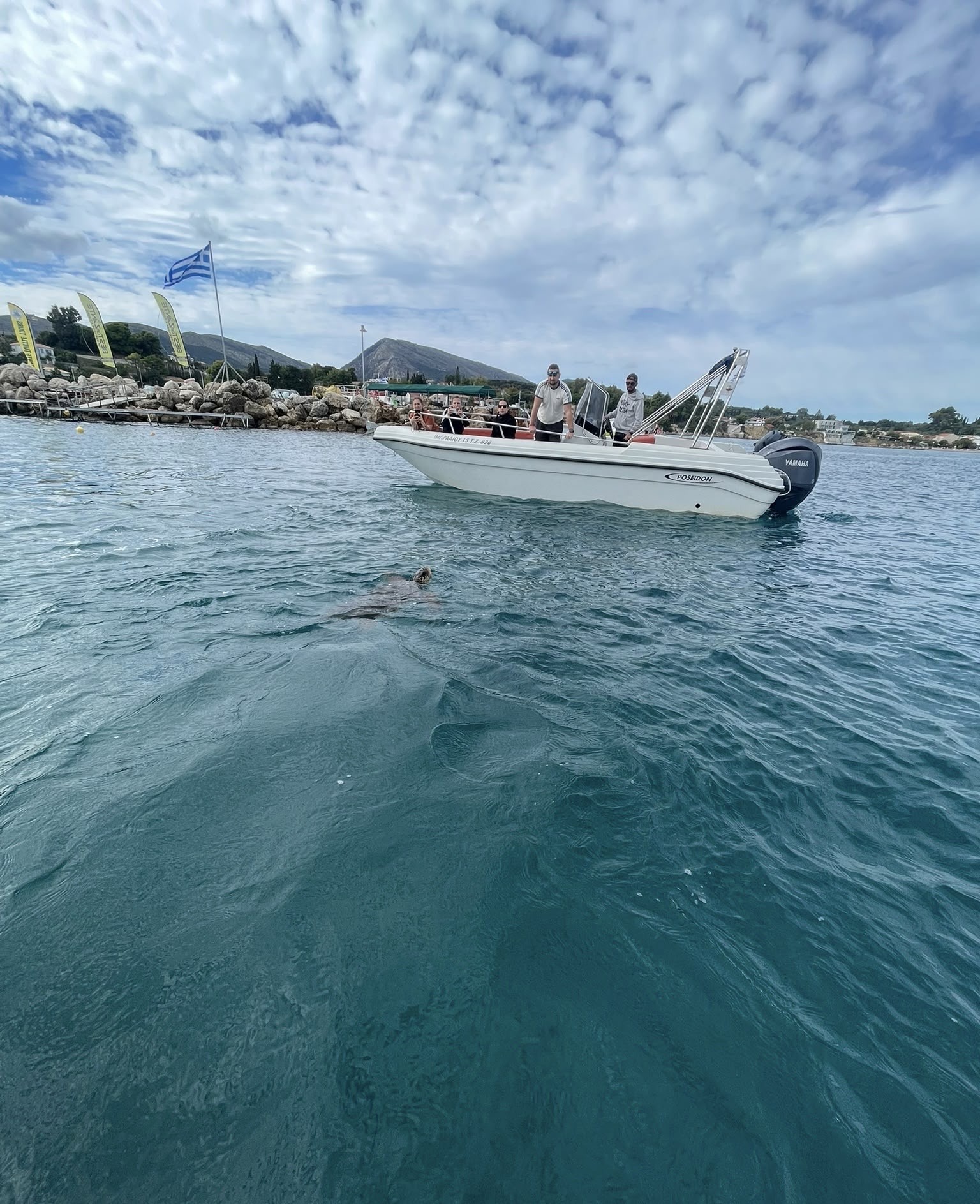
We cruised slowly across the bay, spotting turtles on the way and stopped in a sheltered spot for snorkelling, before heading over to the Keri Caves, a series of beautiful sea caves where the water turns that same incredible Ionian blue beneath the cliffs.
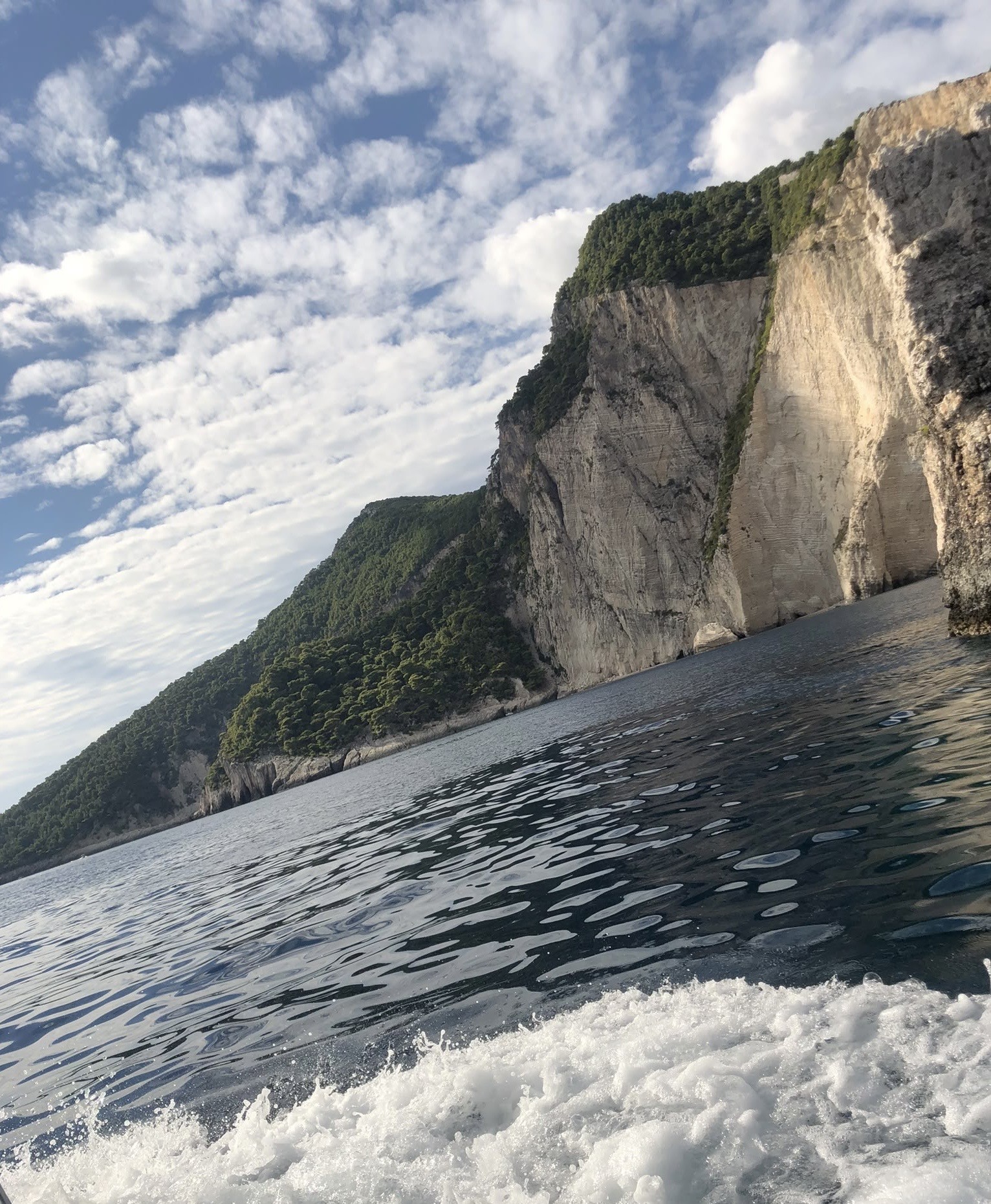
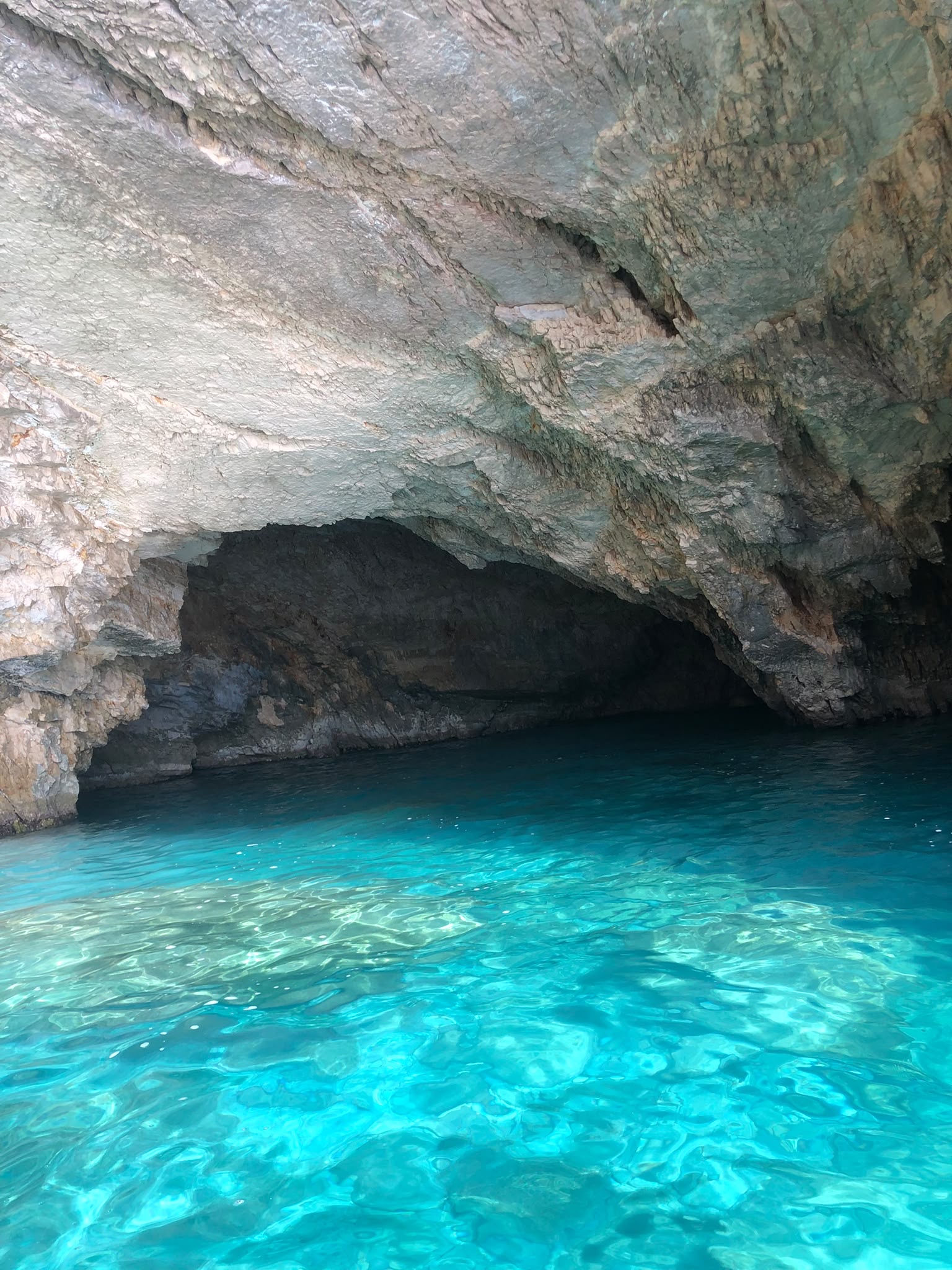
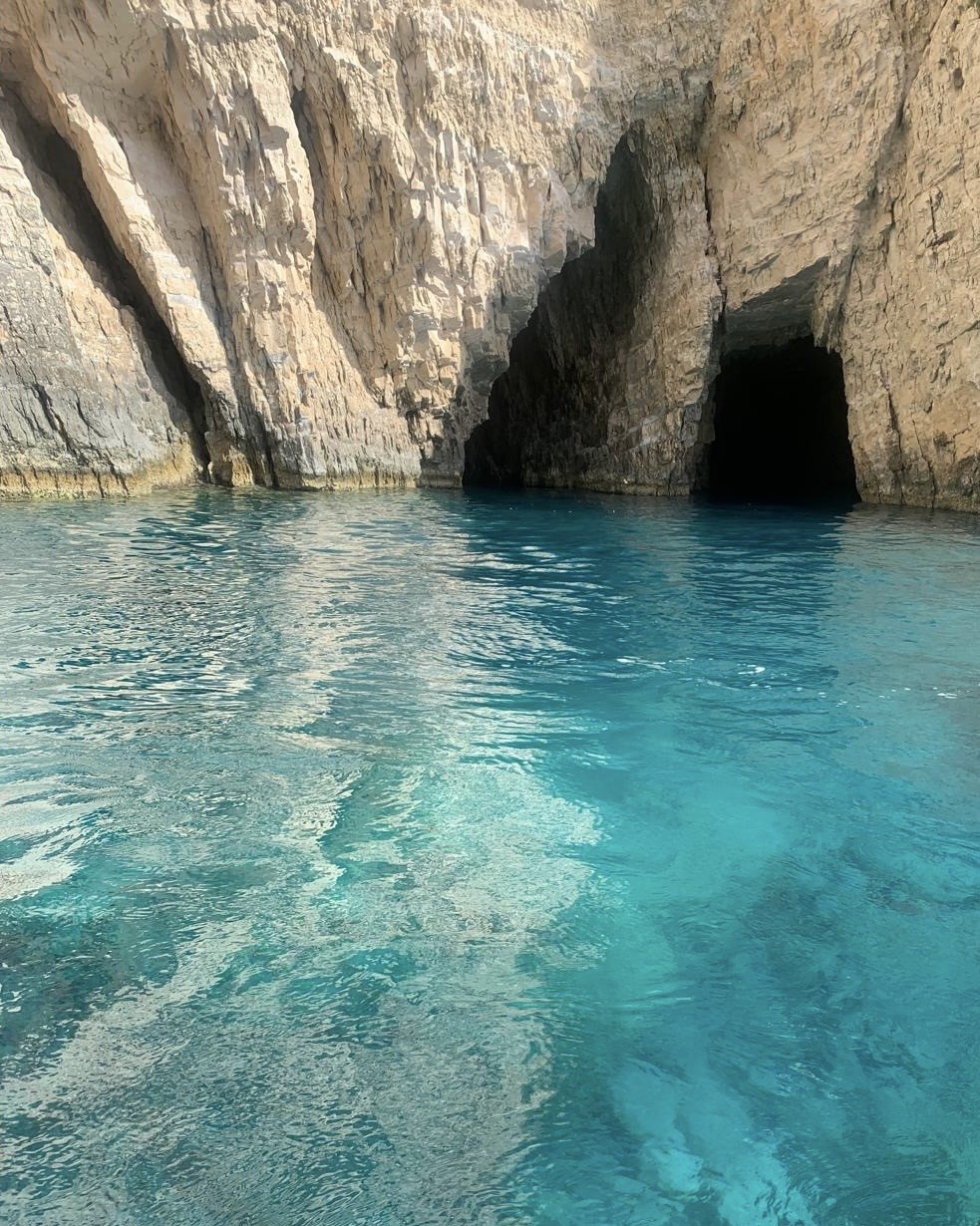
From there we continued to Marathonisi, better known as Turtle Island. This little uninhabited islet sits in the heart of Laganas Bay and, from above, its shape really does resemble a turtle. It is one of the key nesting sites for the loggerheads, so access is carefully controlled.
During the main nesting and hatching season in summer the central parts of the beach are strictly off‑limits, visitors must stay in designated zones, and boats are only allowed to drop off and pick up in specific areas. By around mid-October most of the hatchlings have made their way safely to the sea, so restrictions ease slightly, but there is still a real sense of being somewhere special and protected.
We had around an hour to swim, wander along the shoreline and simply enjoy the views back across the bay.
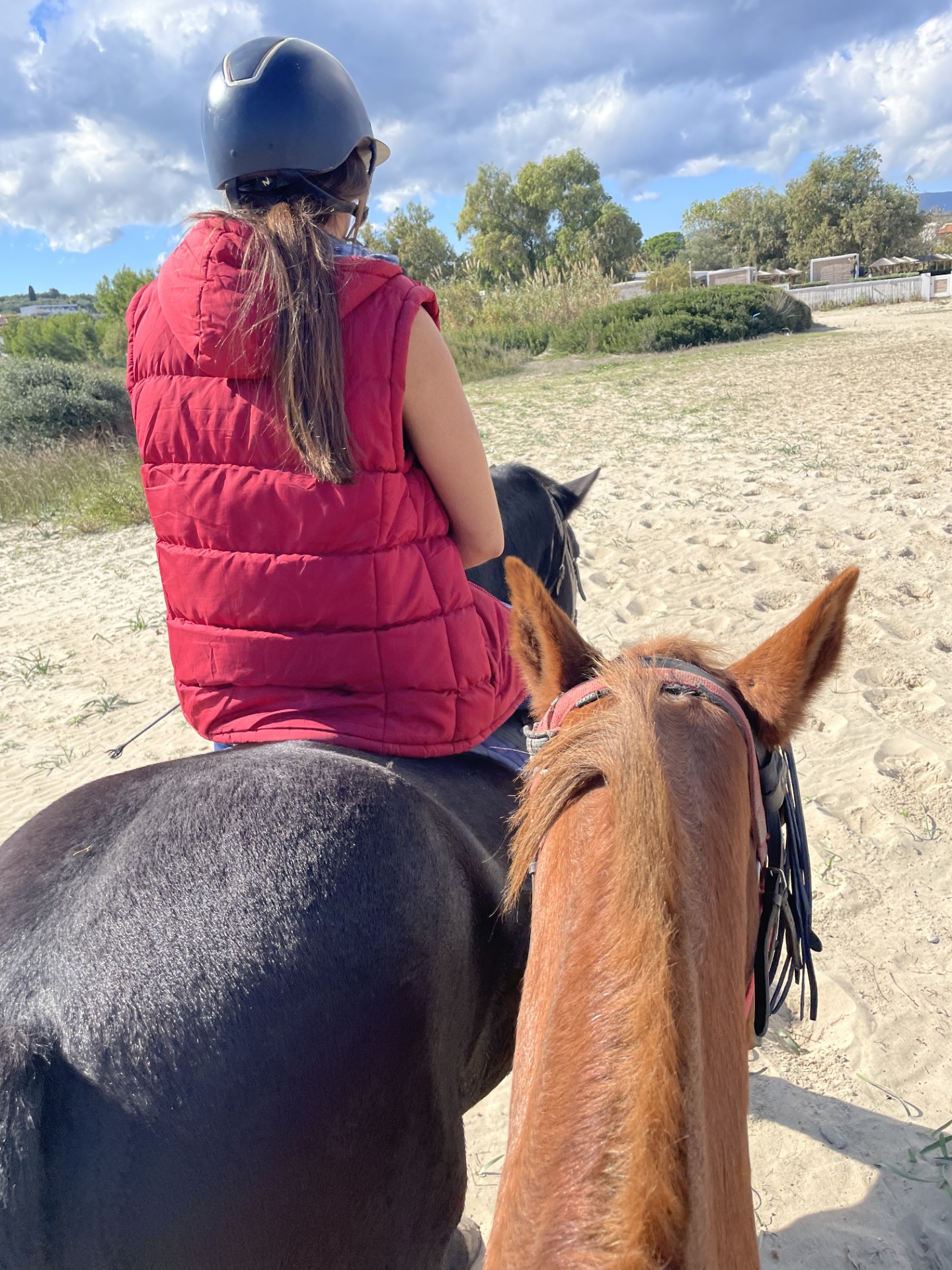
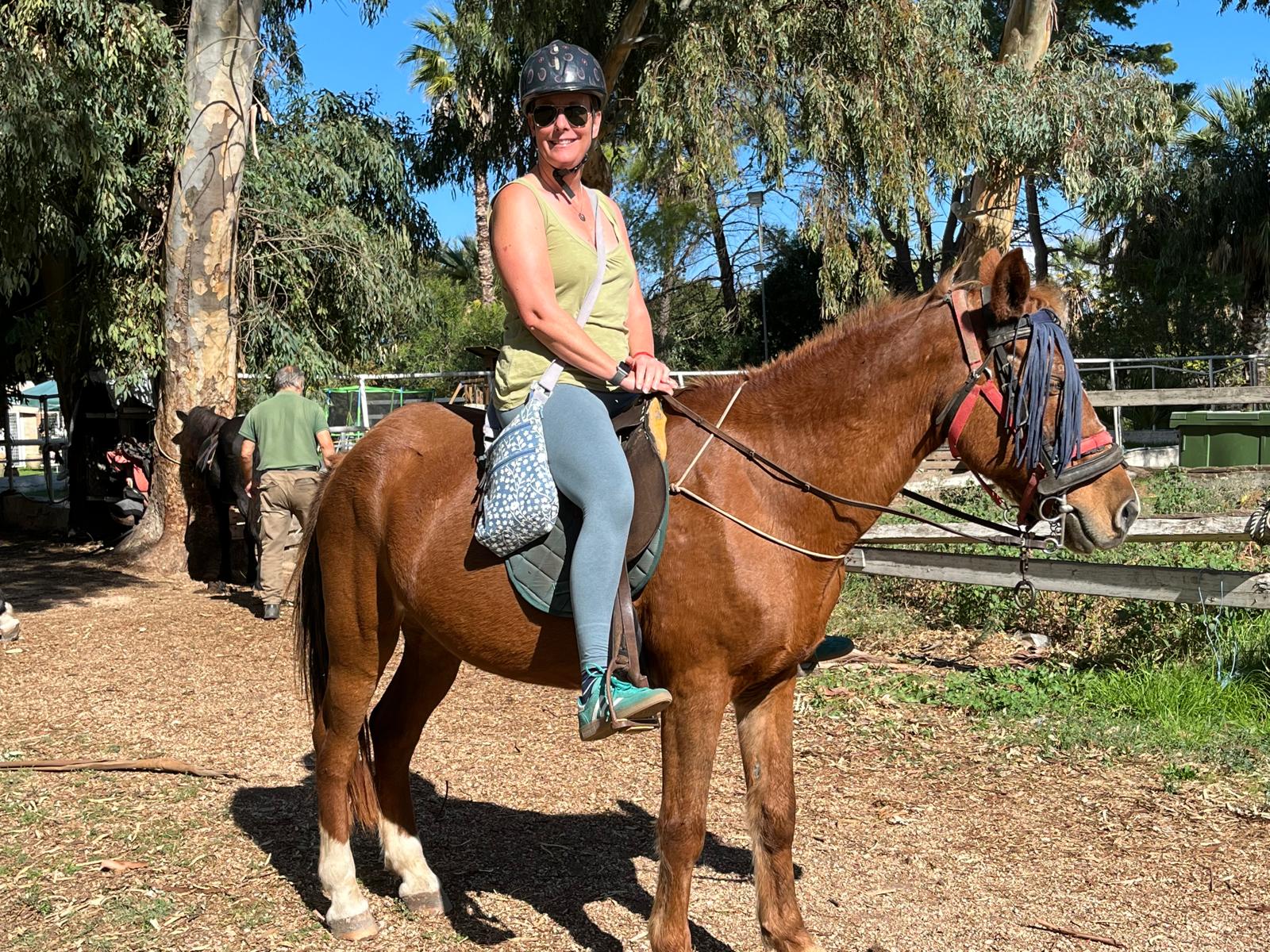
On our final day in Zakynthos we were picked up from our hotel and driven to a small farm just north of Tsilivi for a horse‑riding excursion. After being matched with suitable horses and given a short briefing, we set off in single file along tracks and fields, eventually reaching the beach.
Riding along the shoreline, with hooves in the sand and waves rolling in beside us, was incredibly peaceful. It felt like the perfect way to round off the week: something a little different, outdoorsy and very memorable.
Is October half term a good time to visit Zakynthos?
For us, the answer is yes, with a couple of things to bear in mind.
If you enjoy getting out and about, exploring, doing boat trips and little adventures without the intense heat or the peak‑season crowds, October half term works really well on Zakynthos. The sea is usually still warm enough for swimming, the days are generally comfortable in shorts and T‑shirts, and the softer autumn light makes everything feel that bit more atmospheric. Famous viewpoints like Shipwreck Beach are far quieter, and you get a more local, laid‑back feel in many places.
However, it is very much the shoulder season, which means:
- The weather is more changeable. You can have glorious pool days but also thunderstorms and cloudier spells.
- Some shops, bars and restaurants will already be closed or winding down for winter.
- Boat trips and activities may run less frequently and are more weather‑dependent.
If what you are really looking for is guaranteed sunshine, long lazy days by the pool and a fully buzzing resort atmosphere, then I would recommend travelling a little earlier in the season, from late May through to September.
But if you are happy to pack a light jumper alongside your swimwear, and you like the idea of a greener, quieter and more relaxed side to Greece, then an October half term in Zante might suit you just as much as it did us.