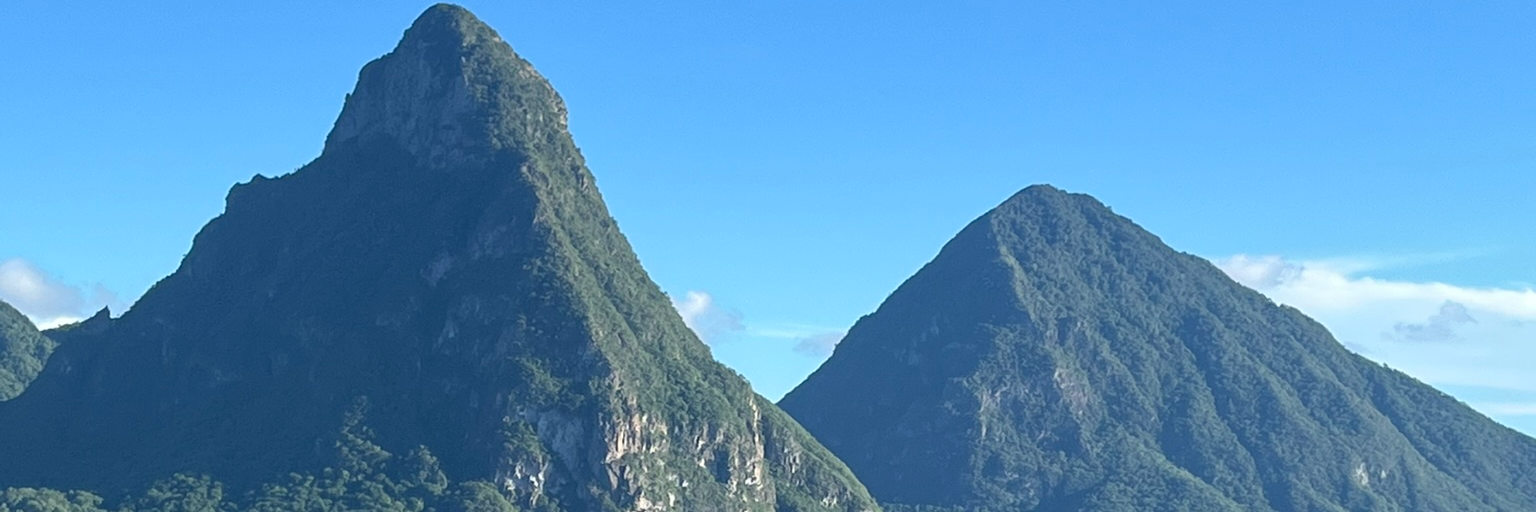
Saint Lucia: the island that gives you more than a beach
Saint Lucia is the sort of Caribbean island that makes it impossible to sit still for an entire holiday, and I mean that as the highest compliment. One day I was gazing up at the Pitons, the next I was walking through rainforest, learning about cacao, browsing a lively market or settling down for a long lunch beside the sea. And yes, there are beautiful beaches for when doing absolutely nothing is the plan.
Remember this for your next pub quiz… Saint Lucia is the only island in the world to be referred to as a she! And I have just spent a week getting to know her.
I recently visited Saint Lucia on a luxury familiarisation trip with the Saint Lucia Tourism Authority, spending the week visiting hotels and experiences across the island. It was a brilliant way to see just how varied the destination is: from intimate, nature-led hideaways in the south to family-friendly beach resorts and spacious villas in the north, with wellness-focused stays and large all-inclusive resorts in between.
Here is a little taster of St Lucia. I have so much more to share, so stay tuned!
The Pitons and the south: the island at its most dramatic
The south is where Saint Lucia really shows off. It's where I inspected Anse Chastanet, Jade Mountain, Ladera and Rabot, and wherever I turned, there they were: the Pitons.
Gros Piton and Petit Piton are twin volcanic spires that rise almost straight out of the sea, and they have been a UNESCO World Heritage Site since 2004. Gros Piton stands at roughly 798 metres and Petit Piton at roughly 743. They are the island's only World Heritage Site, and they are so loved that the local beer is named after them. No photograph prepares you for seeing them in real life!
The area around the nearby town of Soufrière packs in more unusual things to do than anywhere else on the island. My number one tip for every client is Sulphur Springs, often called the Caribbean's only drive-in volcano. You can wander past steaming vents and bubbling pools, breathe in that unmistakable sulphur smell, and then sink into a warm, mineral-rich mud bath. It's about a ten-minute drive from Soufrière, so it's easy to fit in.
Make a day of it. Diamond Falls Botanical Gardens has a waterfall and historic mineral baths fed by geothermal springs, and the Toraille Waterfall is a short drive away for a cool, refreshing rinse after the mud. For the best effort-to-reward ratio on the whole island, add the Tet Paul Nature Trail: a gentle, guided walk of under an hour that finishes with sweeping views of both Pitons.
Rainforest, waterfalls and adventure
If you're the kind of traveller who gets restless on a sun lounger, Saint Lucia is going to make you very happy. The rainforest, waterfalls, boat trips, snorkelling, diving, ziplining and hiking can all fit into one trip, and the island is small enough that you really can mix and match.
The interior is properly wild and green. Edmund Forest Reserve is a protected rainforest near Mount Gimie, the island's highest peak, with lush valleys, towering trees and trails that lead to waterfalls. If you're lucky, you might even spot the Saint Lucia parrot, one of the island's rare endemic birds. Closer to the north, Rainforest Adventures runs an eco-adventure park high in the rainforest, with ziplining and canopy experiences for anyone who wants to see the treetops from above.
For a proper challenge, hiking Gros Piton is the one that active travellers rave about, and it's by far the more popular of the two Pitons to climb. Whichever you choose, I'd always check fitness levels, footwear and guide requirements before booking, and head out early before the heat builds.
Cacao and chocolate: the sweetest surprise
I did not expect chocolate to be one of my favourite parts of Saint Lucia, but here we are! I loved seeing how cacao has become part of the visitor experience, from learning how it's grown and made to tasting the results.
The best place to start is Rabot Estate, which I visited when inspecting Rabot Hotel by Hotel Chocolat. It's a working cacao farm of around 140 acres in the rainforest near Soufrière, bought by British chocolatier Hotel Chocolat in 2006. Its Project Chocolat "tree to bar" experience takes about two and a half hours and includes a walk through the cacao groves, tasting fresh cacao pulp, and making your own chocolate bar, with lunch included.
Here's a tip I love giving clients: while the Rabot Hotel itself is adults-only, the tree-to-bar tour is open to families, so it's a brilliant day out for anyone staying elsewhere on the island.
Beaches, bays and the sea
And yes, the beaches are every bit as beautiful as you'd hope. What I love is how different they are from one end of the island to the other. Some are calm and sheltered, others more exposed, so it's worth asking about sea conditions and water entry if you're travelling with young children or less confident swimmers.
Marigot Bay, where I stayed at Zoetry, is one of the prettiest bays in the Caribbean. Its calm, clear water is ideal for beginner snorkellers, and it's also the departure point for boat trips along the west coast to Anse Cochon, a dark-sand beach with a near-shore reef inside a marine reserve. Further south, Anse Chastanet and Sugar Beach are famous for coral reefs and marine life just a few metres from the shore.
In the north, Pigeon Island National Landmark is a real favourite of mine to recommend. It's a small, historic island joined to the mainland by a causeway, with two calm beaches, ruins from the days when the French and British fought over Saint Lucia, and a hike up to Fort Rodney for views over Rodney Bay. It's also the main stage for the Saint Lucia Jazz & Arts Festival.
Food, drink and Friday night fun
Food is one of the easiest ways to connect with Saint Lucia, and I'm a convert! Green fig and saltfish is the national dish, and here's a fun fact to share at the table: the "green figs" are actually unripe green bananas, served with flaked saltfish. Beyond that, fresh fish, Creole stews, local produce, cassava and cocoa all have a proud place in Saint Lucian food culture.
To drink, look out for Piton beer, a crisp lager named after the twin peaks and brewed on the island since 1972, and for Bounty rum, often called the spirit of Saint Lucia. Rum punch is practically a national pastime.
If you want the most fun night out on the island, plan around a Friday. The Gros Islet street party in the north has been going for more than 50 years, with barbecues, Piton beer, music and dancing in the streets from sunset. For something more food-focused and family-friendly, the Anse La Raye Fish Fry on the west coast serves up freshly caught seafood at waterfront stalls. Locals will tell you to start in Anse La Raye and then head on to Gros Islet when you're ready to dance!
A little history, with a lot of character
Saint Lucia's story stretches back long before tourism. Indigenous communities lived here before European colonisation, and the island's later history was shaped by French and British competition. It changed hands between the two powers repeatedly, which helps explain the mix of French-influenced place names, language and food alongside British links. Saint Lucia became independent in 1979 and remains part of the Commonwealth.
What I loved is that this history isn't just something you read on a plaque. You can hear it in Kwéyòl, see it in local traditions and taste it in the food. English is the official language, while Saint Lucian Creole, commonly called Kwéyòl, is widely spoken. A friendly "bonjou" (good morning) or "mèsi" (thank you) goes a long way, even if your pronunciation needs a little work!
Here's a fact that stopped me in my tracks: for a country of fewer than 200,000 people, Saint Lucia has produced two Nobel laureates, Sir Arthur Lewis (Economics, 1979) and Sir Derek Walcott (Literature, 1992). That gives it more Nobel laureates per head of population than any other country in the world. Another one for the pub quiz!
A few customs worth knowing before you go: be friendly and respectful, dress appropriately when visiting communities or religious sites, and always ask before photographing people. Resort dress codes vary, but smart-casual is a useful choice for dinner. At markets, a little Eastern Caribbean dollar cash is handy, although US dollars are widely accepted in tourist areas. Check the exchange rate and any change you receive.
Festivals worth planning around
Saint Lucia has a gloriously lively calendar, and if you build a trip around one of these events you'll get to see the island at its most joyful.
- Saint Lucia Jazz & Arts Festival: local and international music plus a wider arts programme, with the main stage on Pigeon Island. It runs from the end of April into May, and the 2027 dates are listed as 30 April to 9 May.
- Carnival: usually held in summer, with costumes, soca, music and street celebrations. In 2026 it ran through July.
- Creole Heritage Month: every October, leading into Jounen Kwéyòl, a celebration of language, food, music, dress and traditions. My own trip was in October, so it was lovely to be on the island during it.
- Nobel Laureate Festival: held each January to honour Sir Arthur Lewis and Sir Derek Walcott, who share a birthday.
Dates change each year, so check the official festival calendar before you book. If you want a quieter holiday, be aware that festival dates can affect demand and accommodation availability.
When should you go?
Saint Lucia is warm all year round, with daytime temperatures commonly around 29–31°C and nights generally in the low-to-mid 20s. The drier period is broadly December to May, while June to November is wetter, with higher rainfall and the Atlantic hurricane season running from June through November. Showers can happen at any time, and a rainy-season day does not automatically mean rain all day.
For the best balance of sunshine and lower rainfall, many travellers choose December to April. It's also a popular period, so prices and availability can be tighter, especially around Christmas, New Year and school holidays. May and early June are worth considering for a shoulder-season balance. June to November may offer better value and lush scenery, but travellers should understand the increased chance of heavy rain or a tropical storm. There is no month that is guaranteed to be "bad"; the right time depends on weather tolerance, budget and priorities.
I spent a week here in October, and it rained once all week, for only ten minutes! The rest of the time it was glorious sunshine.
Practical tips before you travel
- Plugs: Saint Lucia generally uses UK-style three-pin Type G plugs, with electricity around 240V/50Hz. Check your device labels and hotel details, as exceptions exist.
- Currency: The official currency is the Eastern Caribbean dollar (XCD), linked to the US dollar. US dollars are widely accepted, but local currency is useful for small purchases.
- Language: English is official and Kwéyòl is widely spoken. A few local greetings will be very much appreciated.
- Getting around: Do not underestimate journey times on winding roads, especially between the north and south. Build in extra time and consider transfers if you'd rather not drive. If you suffer from travel sickness, pack your remedies, because those bends are no joke!
- Pack: Reef-conscious sun protection, insect repellent (I was eaten alive!), a light waterproof, comfortable walking shoes, swimwear and a smart-casual dinner outfit.
- Adventure: Rainforest, waterfalls, boat trips, snorkelling, diving, ziplining and hiking can all be part of one trip. Check fitness, footwear and accessibility requirements before booking.
- Beach choice: Some beaches are calm and sheltered; others are more exposed. Ask about sea conditions and water entry if you're travelling with young children or less confident swimmers.
- Travel insurance: Choose cover appropriate to your plans, including excursions and any relevant disruption cover. Check current entry requirements and official travel advice before departure.
Who is Saint Lucia right for?
Saint Lucia works brilliantly for couples and honeymooners, but it is far from only a romance destination. Families can find resorts with calm beaches, villas and family facilities. Active travellers can add hiking, diving and rainforest experiences. Anyone interested in food, culture or wellness can build a whole trip around those passions. The key is choosing the right part of the island and the right accommodation: a hillside boutique hotel with steps and dramatic views is a very different holiday from a large all-inclusive beach resort.
My biggest takeaway? Saint Lucia rewards a little curiosity. Make time to leave the sun lounger, talk to people, try the local food and see more than one corner of the island. You may arrive for the beaches, but it's the mix of scenery, culture and genuinely varied places to stay that makes this destination so special.
The hotels: where I stayed and what I inspected
Keep an eye on my blog! During my visit I inspected 16 hotels and stayed at four of them, and I'll be sharing reviews of each.
I stayed at:
- Zoetry Marigot Bay
- BlueZone Club Residences by A'ila
- The Landings Resort and Spa
- Sapphire Sands
I inspected:
- Anse Chastanet
- Jade Mountain
- Rabot Hotel by Hotel Chocolat
- Ladera Resort
- Sandals Regency La Toc
- East Winds
- Windjammer Resort
- Secrets
- Cap Maison
- Royalton
- BodyHoliday
- The LifeCo Wellness Resort
Stick around for the rest of the blog and you'll find out which resorts were my favourites!
In the meantime, if you would like me to explore options for your next trip to St Lucia, give me a call!